Further Resources
- Below is more information on a variety of topics with useful resources. Click the links below to jump directly to the relevant topic.
Why it's important to spay and neuter your pets
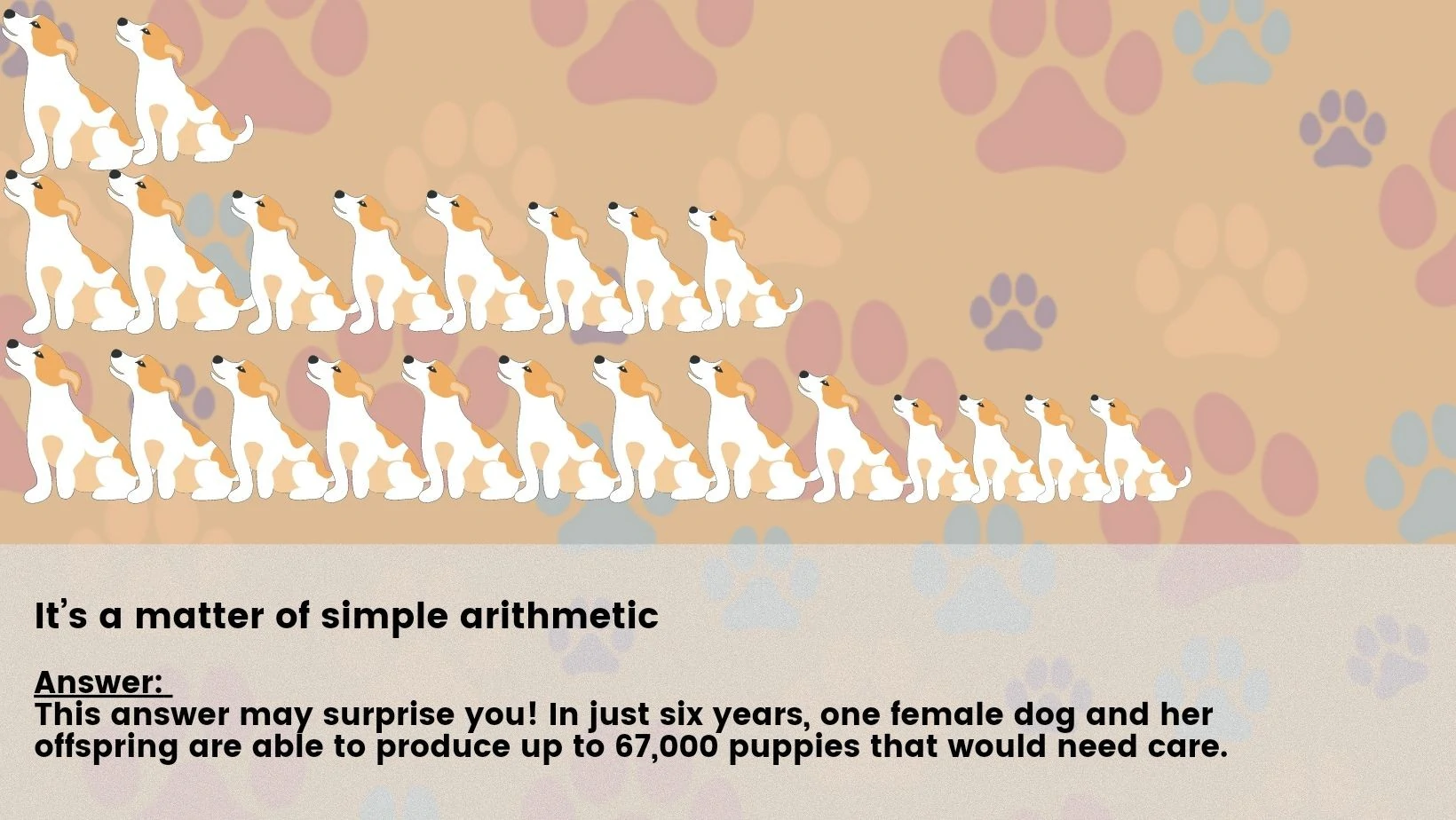
Pet overpopulation… the facts are simple. There are just too many pets and not enough homes. The overpopulation problem has reached crisis levels, and the Sacramento SPCA is dedicated to helping end this crisis in our community by offering and promoting spaying and neutering. Consider these statistics as to how just one litter can result in hundreds to thousands of unwanted pets:
The Prolific Dog:1st year - 4 offspring with 2 females2nd year - 12 offspring3rd year 36 offspring5th year - 324 offspring
The Prolific Cat:1st year - 3 litters = 12 offspring2nd year -144 offspring3rd year 1,728 offspring4th year - 10,736 offspring
Affordable Veterinary Services in the Sacramento Area:
Veterinary Service | Location | Website | Phone Number |
Mercy Pet Hospital,
Citrus Heights | 6418 Tupelo Dr.Citrus HeightsCA 95621 | 916-723-3456 | |
Mercy Pet Hospital,
Fair Oaks
| 5227 Hazel Ave.Fair OaksCA 95628 | 916-961-1567 | |
Family Friends Veterinary Hospital | 5910 Auburn Blvd.Citrus HeightsCA 95621 | 916-344-8765 | |
Discovery Animal Hospital | 615 Northfield Dr.SacramentoCA 95833 | 916-900-1354 | |
Capital Pets Animal Hospital | 7911 Bruceville Rd.SacramentoCA 95823 | 916-361-4506 | |
Veterinary Medical Center | 10115 Folson Blvd.Rancho CordovaCA 95670 | 916-682-3382 | |
Broadway Pet Hospital | 1632 BroadwaySacramentoCA 95818 | 916-446-6154 | |
Akaal Pet Hospital | 6081 Greenback Ln.Citrus HeightsCA 95621 | 916-398-2980 | |
Reagor Pet Hospital | 2513 Walnut Ave.CarmichealCA 95608 | 916-971-1551 | |
Citrus Heights Pet Hospital | 7404 Auburn Blvd.Citrus HeightsCA 95610 | 916-725-2700 |
To look for a vet clinic that accepts Care Credit near you, please go to: https://www.carecredit.com/doctor-locator/To look for a vet clinic that accepts Scratch Pay near you, please go to: https://scratchpay.com/practices/search/

Spay and Neuter Myths & Facts
Myth: My pet will get fat and lazy. Fact: The truth is that most pets get fat and lazy because their owners feed them too much and don't give them enough exercise.
Myth: It's better to have one litter first. Fact: Medical evidence indicates the opposite. In fact, the evidence shows that females spayed before their first heat are typically healthier. Many veterinarians sterilize dogs and cats as young as eight weeks of age.
Myth: My children should experience the miracle of birth. Fact: Even if children are able to see a pet give birth - which is unlikely, since it usually occurs at night and in seclusion - the lessen they will really learn is that animals can be created and discarded as it suits adults. Instead, it should be explained to children that the real miracle is life and that preventing the birth of some pets can save the lives of others.
Myth: But my pet is a purebred. Fact: So is at least one out of every four pets brought to animal shelters around the country. There are just too many dogs and cats - mixed and purebred alike.
Myth: I want my dog to be protective. Fact: Spaying or neutering does not affect a dog's natural instincts to protect home and family. A dog's personality is formed more by genetics and environment than by sex hormones.
Myth: I don't want my male dog or cat to feel like less of a male. Fact: Pets don't have any concept of sexual identity or ego. Neutering will not change a pet's basic personality. He doesn't supper any kind of emotional reaction or identity crisis when neutered.
Myth: But my dog (or cat) is so special. I want a puppy (or kitten) just like them. Fact: A dog or cat may be a great pet, but that doesn't mean their offspring will be a carbon copy. In fact, an entire litter of puppies or kittens might receive all of a pet's (and their mate's) worst characteristics.
Myth: It's too expensive to have my pet spayed or neutered. Fact: There are many affordable spay/neuter options in our community. Please see the resources list we have made available. Whatever the actual price, spay or neuter surgery is a one-time cost - a relatively small cost when compared to all the benefits. It's a bargain compared to the cost of having a litter and ensuring the health of the mother and litter; two months of pregnancy and another two months until the litter is weaned can add up to significant veterinary bills and food costs; particularly if complications develop. Most importantly, it's a very small price to pay for the health of your pt and the prevention of the births of more unwanted pets.
Myth: I'll find good homes for all the puppies and kittens. Fact: You may find good homes for your pet's litter. But each home you find means on less home for the dogs and cats in shelters who need good homes. Also, in less than one year's time, each of your pet's offspring may have had his or her own litter, adding even more animals to the population. The problem of pet overpopulation is created and perpetuated one litter at a time.
Myth: It's better to have one litter first. Fact: Medical evidence indicates the opposite. In fact, the evidence shows that females spayed before their first heat are typically healthier. Many veterinarians sterilize dogs and cats as young as eight weeks of age.
Myth: My children should experience the miracle of birth. Fact: Even if children are able to see a pet give birth - which is unlikely, since it usually occurs at night and in seclusion - the lessen they will really learn is that animals can be created and discarded as it suits adults. Instead, it should be explained to children that the real miracle is life and that preventing the birth of some pets can save the lives of others.
Myth: But my pet is a purebred. Fact: So is at least one out of every four pets brought to animal shelters around the country. There are just too many dogs and cats - mixed and purebred alike.
Myth: I want my dog to be protective. Fact: Spaying or neutering does not affect a dog's natural instincts to protect home and family. A dog's personality is formed more by genetics and environment than by sex hormones.
Myth: I don't want my male dog or cat to feel like less of a male. Fact: Pets don't have any concept of sexual identity or ego. Neutering will not change a pet's basic personality. He doesn't supper any kind of emotional reaction or identity crisis when neutered.
Myth: But my dog (or cat) is so special. I want a puppy (or kitten) just like them. Fact: A dog or cat may be a great pet, but that doesn't mean their offspring will be a carbon copy. In fact, an entire litter of puppies or kittens might receive all of a pet's (and their mate's) worst characteristics.
Myth: It's too expensive to have my pet spayed or neutered. Fact: There are many affordable spay/neuter options in our community. Please see the resources list we have made available. Whatever the actual price, spay or neuter surgery is a one-time cost - a relatively small cost when compared to all the benefits. It's a bargain compared to the cost of having a litter and ensuring the health of the mother and litter; two months of pregnancy and another two months until the litter is weaned can add up to significant veterinary bills and food costs; particularly if complications develop. Most importantly, it's a very small price to pay for the health of your pt and the prevention of the births of more unwanted pets.
Myth: I'll find good homes for all the puppies and kittens. Fact: You may find good homes for your pet's litter. But each home you find means on less home for the dogs and cats in shelters who need good homes. Also, in less than one year's time, each of your pet's offspring may have had his or her own litter, adding even more animals to the population. The problem of pet overpopulation is created and perpetuated one litter at a time.
Pet Loss Support
The death of a pet is never easy, but there are resources available if you need further support. Take a look at the links below for videos, chat rooms and meetings to support you through the death of a beloved pet.
Which dog toys are made in the USA?
- Dog toy brands made in the USA:
- Chelsey's Toys
- FreezBone
- Goughnuts
- Hugglehounds
- Outward Hound
- P.L.A.Y.
- Planet Dog
Pet-Friendly Housing Resources
Finding (and keeping) a safe, comfortable home for pets can be challenging for pet owners. Pets are family and having them in a loving home is essential for their well-being. Pet-inclusive housing policies help reduce pet surrenders by making it easier for pet owners to find and maintain homes that welcome their animals. All pet owners should have equal access to pet-friendly housing, regardless of their background, location or resources.
There are a variety of resources to educate and empower staff, volunteers, pet owners, landlords and policymakers. Utilize these tools, examples and resources to help you navigate housing challenges in your community. The more we help people—especially those facing housing insecurity, financial hardship, or crisis—the fewer animals end up in shelters.
- Removing Barriers to Pets in Housing
- Pet-Inclusive Housing Initiative (Michelson Found Animals)
- Housing Crisis & Eviction Response Toolkit (HASS)
- Camp Maddie: Pet-Inclusive Housing Edition (Maddie's Fund)
- Don’t Forget the Pets (Greater Good Charities & Red Rover)
- National Rental Resource Dashboard (My Pitbull is Family)
- Sample Housing Resource List (Paws Between Homes)
- Housing Needs by State (National Low Income Housing Coalition)
- Housing Resources: National & by State (Just Shelter)
Taken from the ASPCA website. Original article here.
What are you feeding your dog?
Dog foods Citrus Heights Pet Hospital recommend:
- Hill’s Science Diet (Colgate-Palmolive Company)
- Royal Canin (Mars)
- Purina, especially Pro Plan (Nestle)
- Eukanuba (Procter and Gamble)
- Iams (Procter and Gamble)
These diets are recommended because they are produced by companies with a strong history in scientific research. These companies follow WSAVA guidelines, employ many high-level experts, invest in nutrition studies, conduct extensive feeding trials, and have stringent industry-leading quality control standards. There are documented cases of dogs with diet-associated dilated cardiomyopathy (DCM) recovering while eating the above diets, some with nothing more than a diet change.For more information, visit these links: • acvn.org • wsava.org• alltradesdvm.com